You are a universe within!
Astrophotography has always been my personal favourite genre of photography. Right from finding a dark site to understanding the planetary motions, taking astrophotography involves a lot of background work, planning, patience and dedication. Further, post picture editing is a must irrespective of the picture formats!
Here are some of the astro-photos depicting the planets, stars and galaxies.
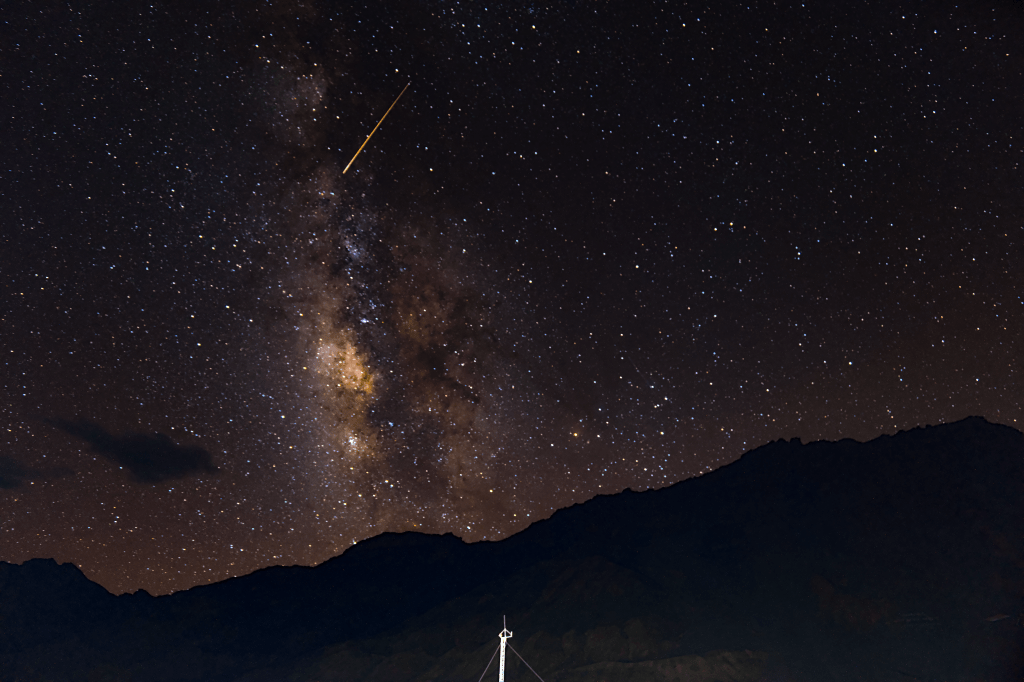
The Magnificent Milky Way
The Milky Way is best visible during the months of March to October in the Northern Hemisphere.
In India, Milky way is best visible from the Himalayas or at altitudes more than 5000 ft above the sea level.
Fortunate to have a shot of a meteorite in the frame.
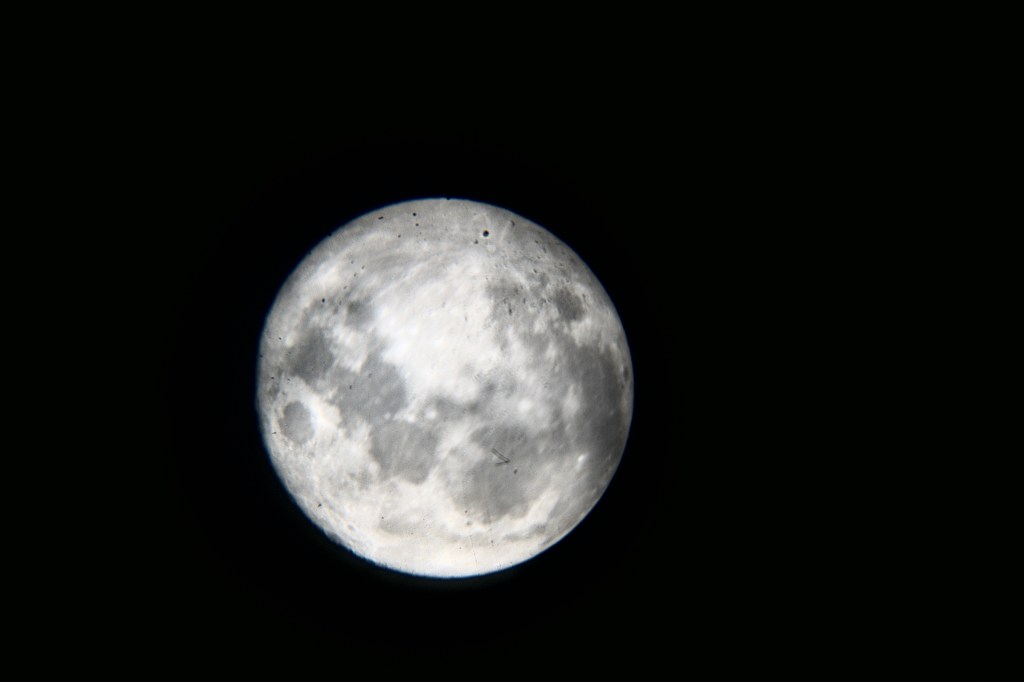
Full Moon
A full moon shot through the telescope lens!
It is best to capture such shots in manual mode with camera focal length set to infinite.
Do note that a small disturbance to the position of the telescope can throw the subject off by 1000s of kilometres!
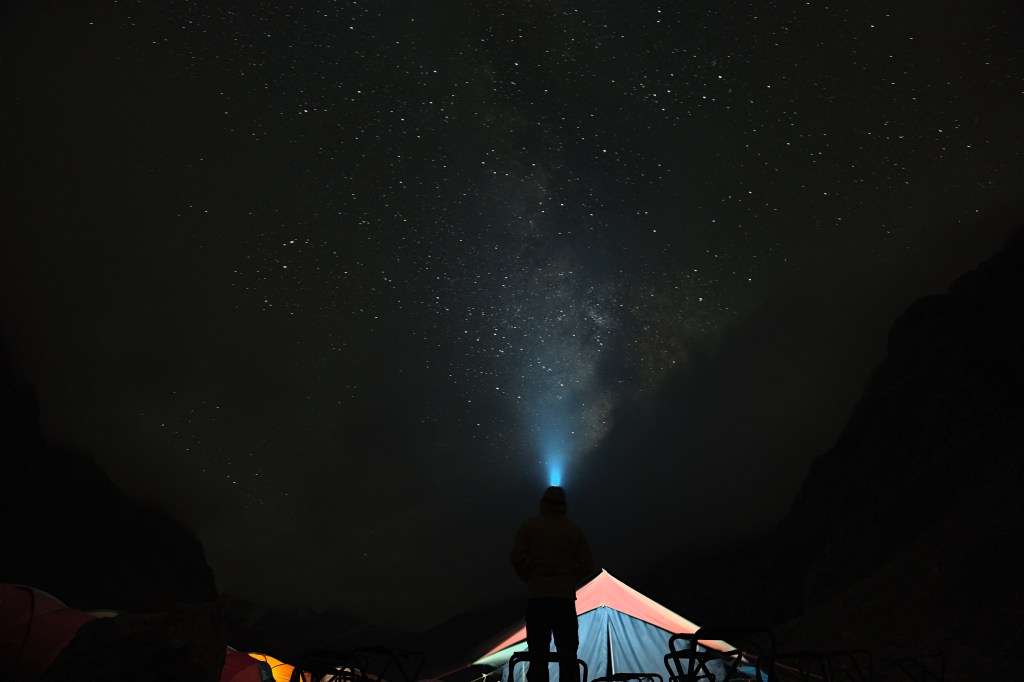
Light up the sky!
The person in the object is standing still for the entire length of the shutter click.
To ensure that the torch light doesn’t cover the night sky, the focus of the camera lens has to be at infinity and the camera needs to be facing the sky.
Behold, the feature presentation!
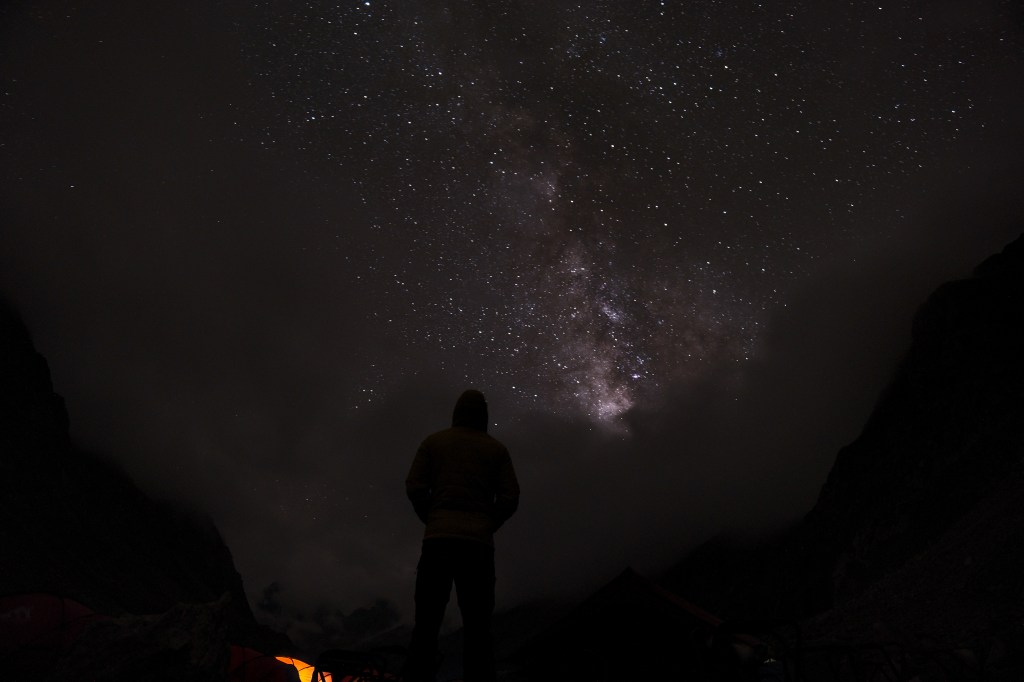
Strong to be frightened!
I always wanted to express myself in one of my clicks.
The dark clouds are an indication of the pale, dark and cold night which would lower the morale and send shivers down the spines of many people.
This picture shows that the person stands strong in the darkness only to be greeted by the spectacular universe!
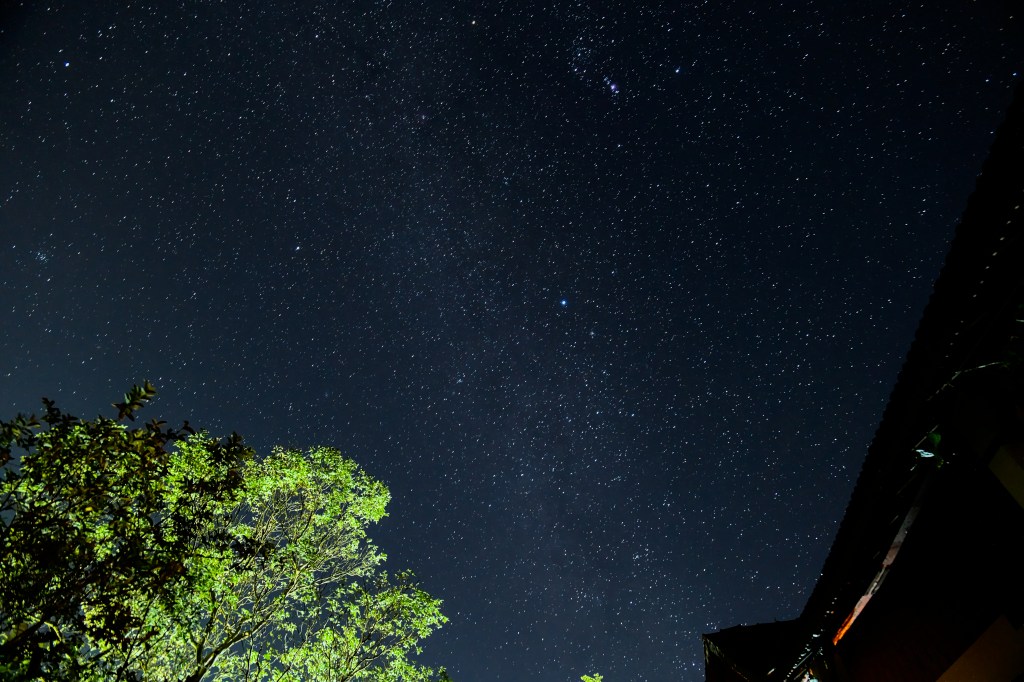
The Tail of the Milky Way!
While the Galactic Core of the Milky Way is visible during the months of March to October in the Norther Hemisphere of the globe, there are a whole lot of constellations which are visible during the other months!
This picture is shot at an altitude of 2980 ft (909 mts) from the sea level in the southern part of India during the month of December.
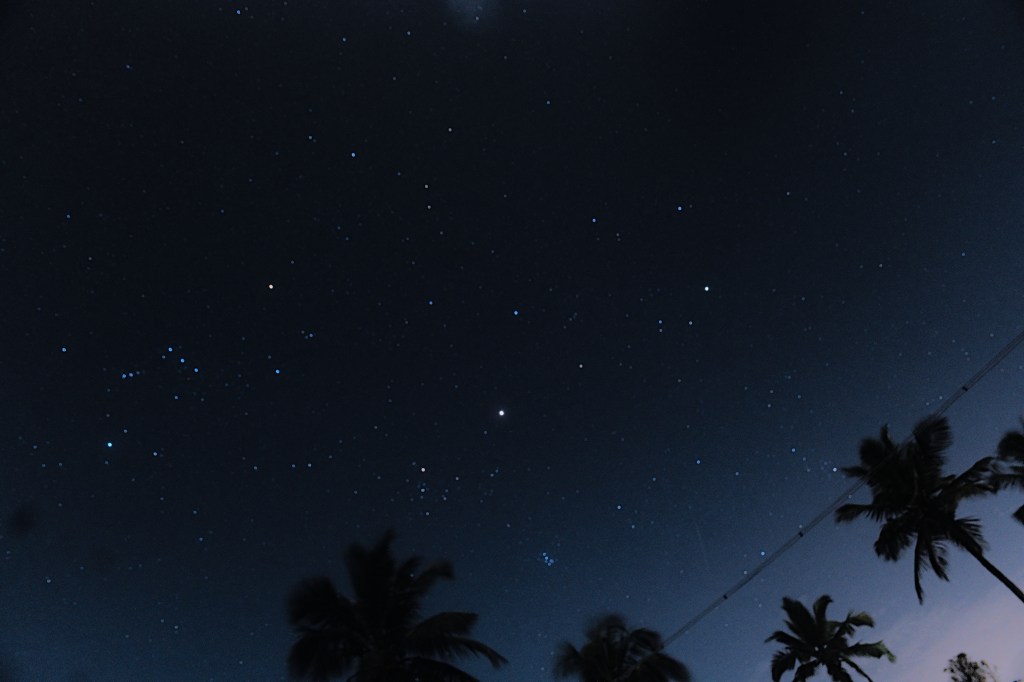
Geminids Constellation!
This picture of the Geminids is an example of how much of a light pollution a full moon can induce in the shots.
While the Geminids constellation is visible, the meteor showers are barely visible in the image. (one meteor shower perpendicular to the wire in the shot).
The astrophotography shots are captured by Rakshith Sridhar on Lumix S5 with 20-60mm kit lens with F3.5-5.6.
#Astrophotography #RakshithSridhar #LumixS5 #India #milkyway
 PixLMos